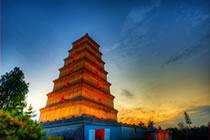
 Xi’an is not only a historical and culture city, but also a trendy city permeated with modern tempo
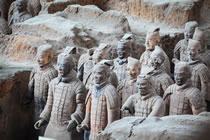 Ancient capital Xi'an, the TOUR dream is over the time
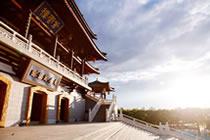 The cultural and historical significance of the area, as well as the abundant relics and sites, help Xian enjoy the laudatory title of 'Natural History Museum'
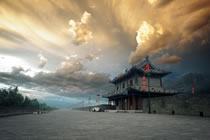 Countless ancient architecture and valuable historical relics have been preserved above and under the ground
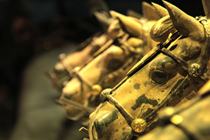 Culture Qin:Museum of Qin Terra-cotta Warriors and Horses
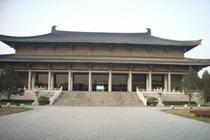 It is the first multi-functional museum complex which integrates museum, monuments and park
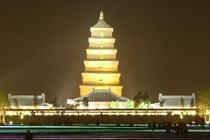 As the symbol of the old-line Xian, Big Wild Goose Pagoda is a well-preserved ancient building and a holy place for Buddhists
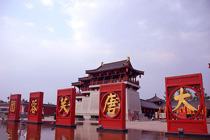 Tang Paradise is located in the Qujiang Resort, southeast of the Xian City, Shaanxi Province
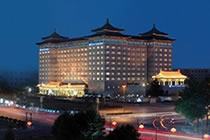 Grand Park Hotel Xi’an
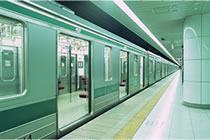 Xi'an Train Station is ranked as Class A by the nation standard with all the modern facilities
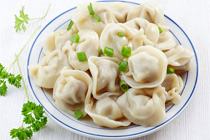 the Chinese dumpling has a long history and is an essential part of celebra-tory meals such as those prepared for the Chinese lunar Spring Festival
 This is the famous Halal snacks street in ancient Xi’an City and the only professional food market that runs exclusive Halal food
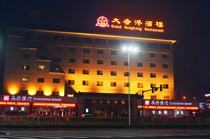 the Grand Hongkong Restaurant has won many honors and titles
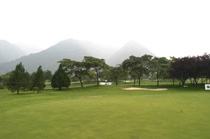 Lying at the foot of Zhongnan Mountain, Xi’an Yajian International Golf Club covers an area of over 214 acres
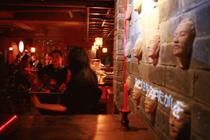 Located just inside the South Gate, Park Qin with the unique decoration to the variety of drink specials
 Kai Yuan Shopping Mall is regarded as one of the biggest shopping mall in Xi'an

Mausoleum of the First Qin Emperor
 Speaking of Qin's Terracotta Warriors and Horses, I dare say that most people definitely have heard about it or even have paid a visit. Its grandeur and mystery really overwhelm you. However, people could have neglected the yet unexcavated mausoleum of Emperor Qin Shi Huang due to all this. Actually, the Museum of Terracotta Warriors forms only part of the tomb. Greater things are yet to come.
Qin Shi Huangdi (259 BC - 210 BC), the first emperor of China, ascended the throne at the age of 13, when construction of his tomb began. On completion of his many conquests, he ordered 720,000 conscript laborers to hurry up on building his royal tomb. It was finished just-in-time in 210 BC for his use. His son, the second Qin Emperor,saw to his entombment.
Location
The tomb of Qin Shi Huang is located in the eastern suburbs of Lintong County, 35 kilometers (22 miles) east of Xian: on the Lishan Mountain in the south and overlooking the Wei River towards north. The lay of the land from Lishan to Mount Hua is shaped dragon-like according to traditional Chinese geomancy. The imperial tomb is at the eye of the dragon. The emperor had chosen well.
Dimensions
In size, the mausoleum is larger than the Great pyramid in Egypt. Seen from afar, it is a hill overgrown with vegetation. It is believed that the tomb consists of an interior city and an exterior city. The exterior of the mausoleum is a low earth pyramid with a wide base. In 2000 years, the original 100-meter-high (328 feet) hillock has been weathered down to about 47 meters (154 feet) high, 515 meters (1,690 feet) long from south to north and 485 meters (1,591 feet) wide east to west. In an area of 2,180,000 square meters (less than one square miles), many large-scale alhambresque buildings housing precious treasures are said to be buried inside the tomb.
According to historical records, the mausoleum was a notorious crime scene. Many laborers died of hardship during its construction, and all the workmen were entombed along with the emperor in order to keep their mouths shut.
Also all the barren royal concubines accompanied the emperor on his last journey.
The Historical Records
Sima Qian, a great historian who wrote in early Han dynasty, offered archeologists great insight on the mausoleum's construction. We learned from him that the tomb is huge. The coffin of Emperor Qin Shihuang was cast in bronze. Underground Palace was gem-studded replica of imperial housing above ground. Moreover, booby traps with automatic-shooting arrows were installed to deter would-be tomb robbers. Heaven and earth were represented in the central chamber of the tomb. Ceiling shaped into sun, moon and stars by inlaying pearls and gems symbolizes the sky and the ground was an accumulation point of rivers, lakes and seas, like Yellow River and Yangtze River, which stands for the earth. It is said that the underground palace was brightly lit by whale oil lamps for eternity. Nowadays, the records in this book have been definitely proved right by archaeological findings and the underground palace of the tomb is presumably well preserved.
Remains of the Mausoleum
As a part of the mausoleum, the terracotta warriors have dazzled the world. But the materials unexcavated are also worth studying. Qin bricks and tiles, engraved with decorative patterns, are strew everywhere around the tomb. There are many satellite tombs built for accompanying Qin Shihuang. Ministers, princesses and princes, the famous and the not so famous were inhumed there. The burial pits for horses, rare birds and pottery figures were ever regarded as the sacrificial objects to the Emperor. Hence the remains from these tombs and pits are beneficial for archaeologists to make further research.
Hopefully one day, the entire mausoleum will be unearthed and displayed to the public.