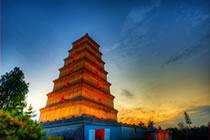
 Xi’an is not only a historical and culture city, but also a trendy city permeated with modern tempo
 Ancient capital Xi'an, the TOUR dream is over the time
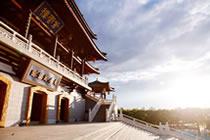 The cultural and historical significance of the area, as well as the abundant relics and sites, help Xian enjoy the laudatory title of 'Natural History Museum'
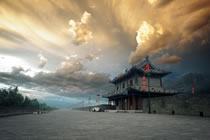 Countless ancient architecture and valuable historical relics have been preserved above and under the ground
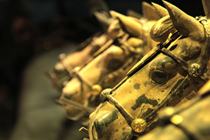 Culture Qin:Museum of Qin Terra-cotta Warriors and Horses
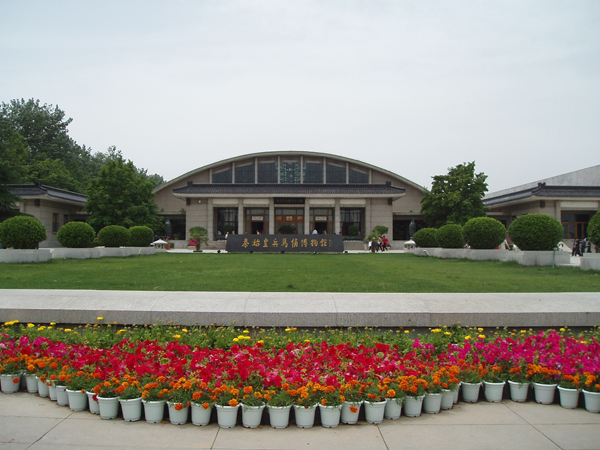
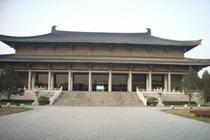 It is the first multi-functional museum complex which integrates museum, monuments and park
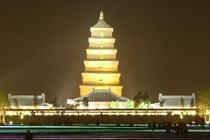 As the symbol of the old-line Xian, Big Wild Goose Pagoda is a well-preserved ancient building and a holy place for Buddhists
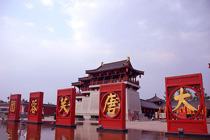 Tang Paradise is located in the Qujiang Resort, southeast of the Xian City, Shaanxi Province
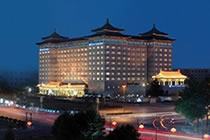 Grand Park Hotel Xi’an
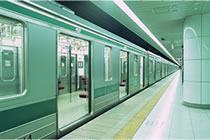 Xi'an Train Station is ranked as Class A by the nation standard with all the modern facilities
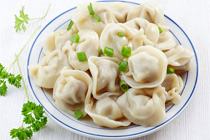 the Chinese dumpling has a long history and is an essential part of celebra-tory meals such as those prepared for the Chinese lunar Spring Festival
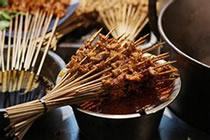 This is the famous Halal snacks street in ancient Xi’an City and the only professional food market that runs exclusive Halal food
 the Grand Hongkong Restaurant has won many honors and titles
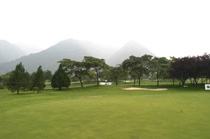 Lying at the foot of Zhongnan Mountain, Xi’an Yajian International Golf Club covers an area of over 214 acres
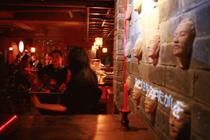 Located just inside the South Gate, Park Qin with the unique decoration to the variety of drink specials
 Kai Yuan Shopping Mall is regarded as one of the biggest shopping mall in Xi'an

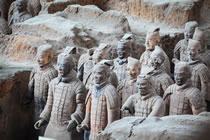
The Terra Cotta Warriors and Horses are the most significant archeological excavations of the 20th century. Work is ongoing at this site, which is around 1.5 kilometers east of Emperor Qin Shi Huang's Mausoleum, Lintong County, Shaanxi province. It is a sight not to be missed by any visitor to China.
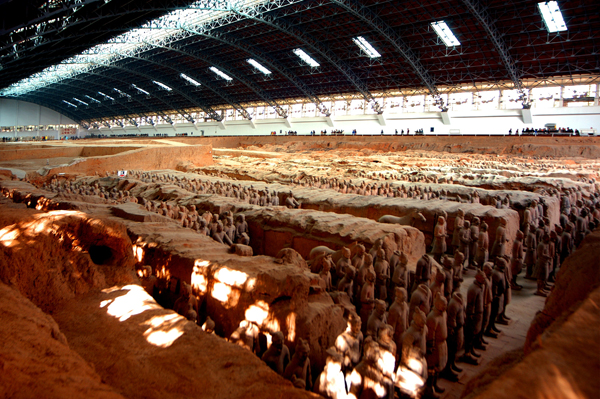
Upon ascending the throne at the age of 13 (in 246 BC), Qin Shi Huang, later the first Emperor of all China, had work begun on his mausoleum. It took 11 years to finish. It is speculated that many buried treasures and sacrificial objects had accompanied the emperor in his after life. A group of peasants uncovered some pottery while digging for a well nearby the royal tomb in 1974. It caught the attention of archeologists immediately. They came to Xian in droves to study and to extend the digs. They had established beyond doubt that these artifacts were associated with the Qin Dynasty (211 --206 BC).

The State Council authorized to build a museum onsite in 1975. When completed, people from far and near came to visit. Xian and the Museum of Qin Terra Cotta Warriors and Horses have become landmarks on all travelers' itinerary.
Life size terracotta figures of warriors and horses arranged in battle formations are the star features at the museum. They are replicas of what the imperial guard should look like in those days of pomp and vigor.
The museum covers an area of 16,300 square meters, divided into three sections: No. 1 Pit, No. 2 Pit, and No. 3 Pit respectively. They were tagged in the order of their discoveries. No. 1 Pit is the largest, first opened to the public on China's National Day, 1979. There are columns of soldiers at the front, followed by war chariots at the back.

No. 2 Pit, found in 1976, is 20 meters northeast of No. 1 Pit. It contained over a thousand warriors and 90 chariots of wood. It was unveiled to the public in 1994.Archeologists cameupon No. 3 Pit also in 1976, 25 meters northwest of No. 1 Pit. It looked like to be the command center of the armed forces. It went on display in 1989, with 68 warriors, a war chariot and four horses.
Altogether over 7,000 pottery soldiers, horses, chariots, and even weapons have been unearthed from these pits. Most of them have been restored to their former grandeur.
The Terracotta Warriors and Horses is a sensational archeological find of all times. It has put Xian on the map for tourists. It was listed by UNESCO in 1987 as one of the world cultural heritages.