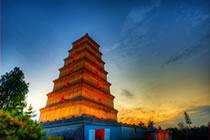
 Xi’an is not only a historical and culture city, but also a trendy city permeated with modern tempo
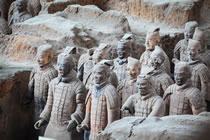 Ancient capital Xi'an, the TOUR dream is over the time
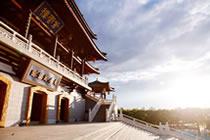 The cultural and historical significance of the area, as well as the abundant relics and sites, help Xian enjoy the laudatory title of 'Natural History Museum'
 Countless ancient architecture and valuable historical relics have been preserved above and under the ground
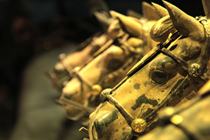 Culture Qin:Museum of Qin Terra-cotta Warriors and Horses
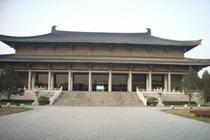 It is the first multi-functional museum complex which integrates museum, monuments and park
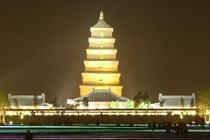 As the symbol of the old-line Xian, Big Wild Goose Pagoda is a well-preserved ancient building and a holy place for Buddhists
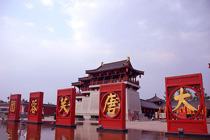 Tang Paradise is located in the Qujiang Resort, southeast of the Xian City, Shaanxi Province
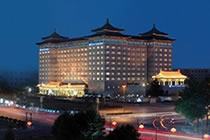 Grand Park Hotel Xi’an
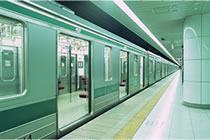 Xi'an Train Station is ranked as Class A by the nation standard with all the modern facilities
 the Chinese dumpling has a long history and is an essential part of celebra-tory meals such as those prepared for the Chinese lunar Spring Festival
 This is the famous Halal snacks street in ancient Xi’an City and the only professional food market that runs exclusive Halal food
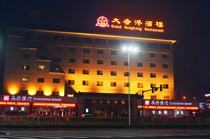 the Grand Hongkong Restaurant has won many honors and titles
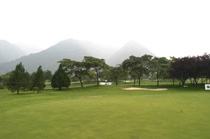 Lying at the foot of Zhongnan Mountain, Xi’an Yajian International Golf Club covers an area of over 214 acres
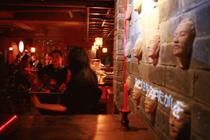 Located just inside the South Gate, Park Qin with the unique decoration to the variety of drink specials
 Kai Yuan Shopping Mall is regarded as one of the biggest shopping mall in Xi'an

The Drum Tower is located northwest of the Bell Tower, across the Bell Tower and Drum Tower Square. Both of them are called the 'sister buildings' or 'morning bell and dark drum'. In ancient China, especially from the Yuan Dynasty (1271-1368), the drums were used to signal the running of time and on occasion were used as an alarm in emergency situations.
The Drum Tower in Xian was initially built in 1380 during the reign of Emperor Hongwu of the Ming Dynasty (1368-1644), and was renovated twice in 1699 and 1740 in the Qing Dynasty (1644-1911). It is a two-storied post and panel structure, 34 meters (about 112 feet) high and 52.6 meters (about 172 feet) long from east to west as well as 38 meters (about 124 feet) wide from north to south. The architecture style of the Drum Tower is a combination of the styles of the Tang Dynasty (618-907) and the Qing Dynasty. However, the Drum Tower also has some innovative features. For example, it should be mentioned that there is no iron nail used anywhere in the Drum Tower.
Arriving at the Drum Tower you will see that there is an arched doorway in the centre of the south and north walls, doorway being 6 meters (about 20 feet) in both height and width. The north entrance leads to Beiyuan Men and south to Xi Dajie. Visitors can go upstairs to the second floor, and enjoy the views around the Drum Tower. Meanwhile, you will notice that there are twenty-four drums in the north and south sides of the Drum Tower. These drums stand for the Twenty-four Solar Terms which is a kind of weather calendar created by the Chinese ancients in order to guide the agricultural production.
In modern times, the Drum Tower is not used as a timer any more, but there are some new attractions for visitors to enjoy. In the year of 1996, a new drum, covered by a whole piece of cowhide was given a place on the Drum Tower. It is the biggest drum in China at present. What is more, visitors will enjoy musical performances on the Drum Tower. These performances will enlighten one on the power of ancient Chinese culture.
When you finish visiting the Drum Tower, you may round off your trip, by tasting a number of delicious snacks of Shaanxi in the Moslem Street (Huimin Jie) adjacent to the Drum Tower.
