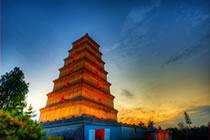
 Xi’an is not only a historical and culture city, but also a trendy city permeated with modern tempo
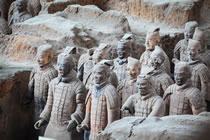 Ancient capital Xi'an, the TOUR dream is over the time
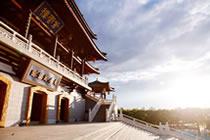 The cultural and historical significance of the area, as well as the abundant relics and sites, help Xian enjoy the laudatory title of 'Natural History Museum'
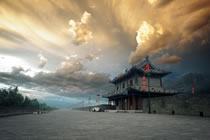 Countless ancient architecture and valuable historical relics have been preserved above and under the ground
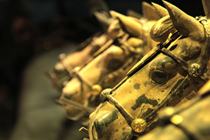 Culture Qin:Museum of Qin Terra-cotta Warriors and Horses
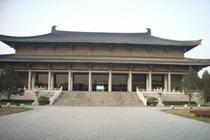 It is the first multi-functional museum complex which integrates museum, monuments and park
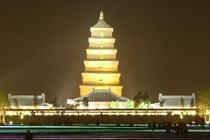 As the symbol of the old-line Xian, Big Wild Goose Pagoda is a well-preserved ancient building and a holy place for Buddhists
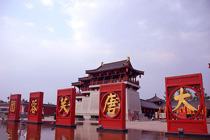 Tang Paradise is located in the Qujiang Resort, southeast of the Xian City, Shaanxi Province
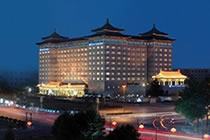 Grand Park Hotel Xi’an
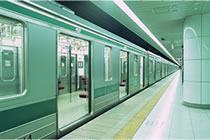 Xi'an Train Station is ranked as Class A by the nation standard with all the modern facilities
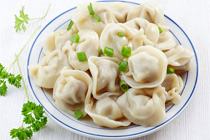 the Chinese dumpling has a long history and is an essential part of celebra-tory meals such as those prepared for the Chinese lunar Spring Festival
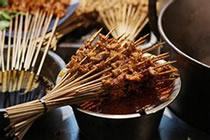 This is the famous Halal snacks street in ancient Xi’an City and the only professional food market that runs exclusive Halal food
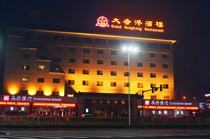 the Grand Hongkong Restaurant has won many honors and titles
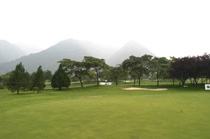 Lying at the foot of Zhongnan Mountain, Xi’an Yajian International Golf Club covers an area of over 214 acres
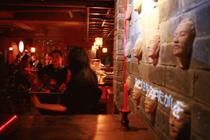 Located just inside the South Gate, Park Qin with the unique decoration to the variety of drink specials
 Kai Yuan Shopping Mall is regarded as one of the biggest shopping mall in Xi'an

Huaqing Hot Springs
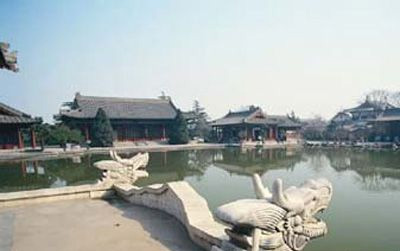 Situated at the northern foot of Mt. Lishan in Lintong County, 30 kilometers (18.6 miles) from Xian City, Huaqing Hot Spring is famed for both its dainty spring scenery and the romantic love story of Emperor Xuanzong (685-762) and his concubine Yang Guifei in the Tang Dynasty (618-907). Its long history and location among the wonderful landscapes of Xian should entice any visitor to visit and bathe in this hot spring.
It is said that King You built a palace here during the Western Zhou Dynasty (11th century BC-711 BC). Additions were subsequently made by the First Emperor Qing (259 BC-210BC) and Emperor Wu during the Western Han Dynasty (206 BC-24). During his reign, the Emperor Xuanzong spent dizzying amounts of his funds to build a luxurious palace, changing its name to Huaqing Hot Spring or Huaqing Palace. Over the course of 41 years in his days, he visited the palace as many as 36 times. The palace thus has a history of 3,000 years and the hotspring a history of 6,000 years! Ranked among the Hundred Famous Garden in China, it is also has the status as a National Cultural Relic Protection Unit and a National Key Scenic Area.
A Visit to the Huaqing Hot Spring
Entering the gate which bears the inscription 'Huaqing Chi' (Huaqing Hot Spring) by Guo Moruo, a noted literary in China, visitors are greeted by two towering cedars. By continuing inward passing two symmetrical palace-style plunge baths and turning right, you will see the Nine-Dragon Lake. Despite the fact that the lake is artificial with an area of 5,300 square meters (6339 square yards), it constitutes one of the main enchanting sceneries in the Huaqing Palace. You will see lotus floating on the water and emitting sweet fragrance, and a white marble statue of Yang Guifei - recognised as one of the four most beautiful women in ancient China - stands tall by the lake like a shy and appealing fairy. Mirrored in the lake you will see a surrounding complex of constructions interspersed with willows and rocks, including Frost Flying Hall (Feishuang Hall) in the north, Yichun Hall and Chenxiang Hall respectively in the east and west as well as Nine Bend Corridor and Dragon Marble Boat. The magnificent Frost Flying Hall used to be the bedroom of Emperor Xuanzong and Yang Guifei, with red supporting pillars and fine-patterned carving. Living in a place so full of spice must have made the inhabitants invigorated and pleased.
Walking southwards through Dragon Marble Boat and several pavilions, you will find the Site of Imperial Pool, which is the only one of its kind to be discovered in China. The five remaining pools are the Lotus Pool, Haitang Pool, Shangshi Pool, Star Pool and Prince Pool. The lotus-like Lotus Pool was made for the Emperors' bath, the Haitang Pool resembling a Chinese Crabapple was intended for concubines, and the Shangshi Pool was designated for officials. It is said that the former Star Pool had no roof and nothing to cover its four sides. There, must have been possible to truly experience the eternal beauty of Yang Guifei.
Huan Garden is the former garden of the Huaqing Palace. There lie the Lotus Pavilion, Viewing Lake Tower (Wanghu Lou), Flying Rainbow Bridge (Feihong Qiao), Flying Glow Hall (Feixia Ge), and Five-Room Hall (Wujian Ting). In popular legend, the Flying Glow Hall was once the place where Yang Guifei would overlook the scenery and cool down her long hair. The Five-Room Hall was built in the late Qing Dynasty (1644-1911). It was the shelter of Empress Dowager Cixi after the Eight-Power Allied Force captured Peking in 1900, and was also the temporary residence of Chiang Kai-shek, the leader of the Chinese Nationalist Party during the world-famous Xian Incidence in 1936. The Huan Garden also features a large-scale mural carrying the inscription 'Yang Guifei Was Summoned to Serve the Emperor in Huaqing Hot Spring'. Composed of 90 white marbles, the mural is 9.15 meters (30 feet) long and 3.6 meters (11.8 feet) high. Depicting the scene of the feast in which Emperor Xuanzong summoned Yang Guifei, it reflects the prosperity of the Tang Dynasty. Odes of Huaqing Hot Spring are also witnesses of past politics, economy and art.
By visiting the Huaqing Hot Spring, you will not only enjoy the scenery, but also taste the joy of imagining yourself back in the days of the Tang Dynasty.
The first pleasure to experience is to have a bath in the imitational Guifei Pool. With an even temperature of 43 degree (109 F), the ever-flowing water of the hot spring contains minerals and organic materials that have therapeutic effects on the skin. Water originating from four spring reaches a discharge level of 112 tons per hour. In the bath pool, you can experience the same comfort as did the Emperor Xuanzong or Yang Guifei.
After the discovery of remains of Tang operas and entertainments, the Exhibition Hall of Tang Art was built in 1995. Here, you can enjoy dance performances imitating the Tang style and a Chinese tea ceremony in the teahouse.
In the palace of Huaqing Hot Spring, visitors who are interested in calligraphy will be delighted to discover the inscriptions collected there. Currently, the inscriptions include in total 7 steles, 16 stones with poems, 7 stone inscriptions, 4 stone carving, and an additional 69 tablets discovered in 1949. All of them represent elite work in the field of calligraphy art and materials of their kinds.
Since Huaqing Hot Spring is located at the foot of Mt. Lishan with remains of ancient buildings such as a beacon tower of Western Zhou Dynasty and the Old Mother Hall of the Tang Dynasty, there are many legends and allusions about it. Among them, the most famous and profound one is about Misusing the Beacon Tower to Tease Vassals.
It happened in the Western Zhou Dynasty during the reign of fatuous King You. At first, he ruled his state relatively peacefully and prosperously and allied with the neighboring feoffs by using a beacon tower in case of invasion of other ethnic groups. If an incident occurred, he could light the fire on the tower as a signal, and then his allies would come to help However, everything changed after he asked a small country, Bao, to pay the beauty Bao Si in tribute.
After Bao Si, who was extremely charming, moved into his palace, she started missing her parents a lot and never presented a single smile. To please her, the King made her the new queen and gave her plenty of largess, but she kept her long face intact and remained taciturn. In lack of another solution, a treacherous court official called Guo Shifu suggested lighting the fire on the beacon tower in order to fool the vassals of other states. King You brought his favorite queen to the beacon tower and followed Guo Shifu's advice. Upon seeing the flame licking the sky, troops of allied feoffs hurried to the tower. To their surprise, they discovered nothing more dangerous than the laughter of King You and Bao Si, so they returned to their feoffs in sulking dismay.
Seeing the happy smile of Bao Si, King You delightedly rewarded Guo Shifu with a thousand taels of gold. After that, he and his queen played with the beacon tower several times, and each time, the troops would leave disappointed. One day, the ethnic group 'Quan Rong' presented a real threat to the kingdom. The King immediately set the beacon tower on fire, but this time, the troops no longer believed him and never showed up in defence. The King was killed and his queen was captured, thus ending the Western Zhou Dynasty.
This story gave birth to the idioms 'A smile values a thousand taels of gold' and 'Misusing beacon tower to tease vassals'.